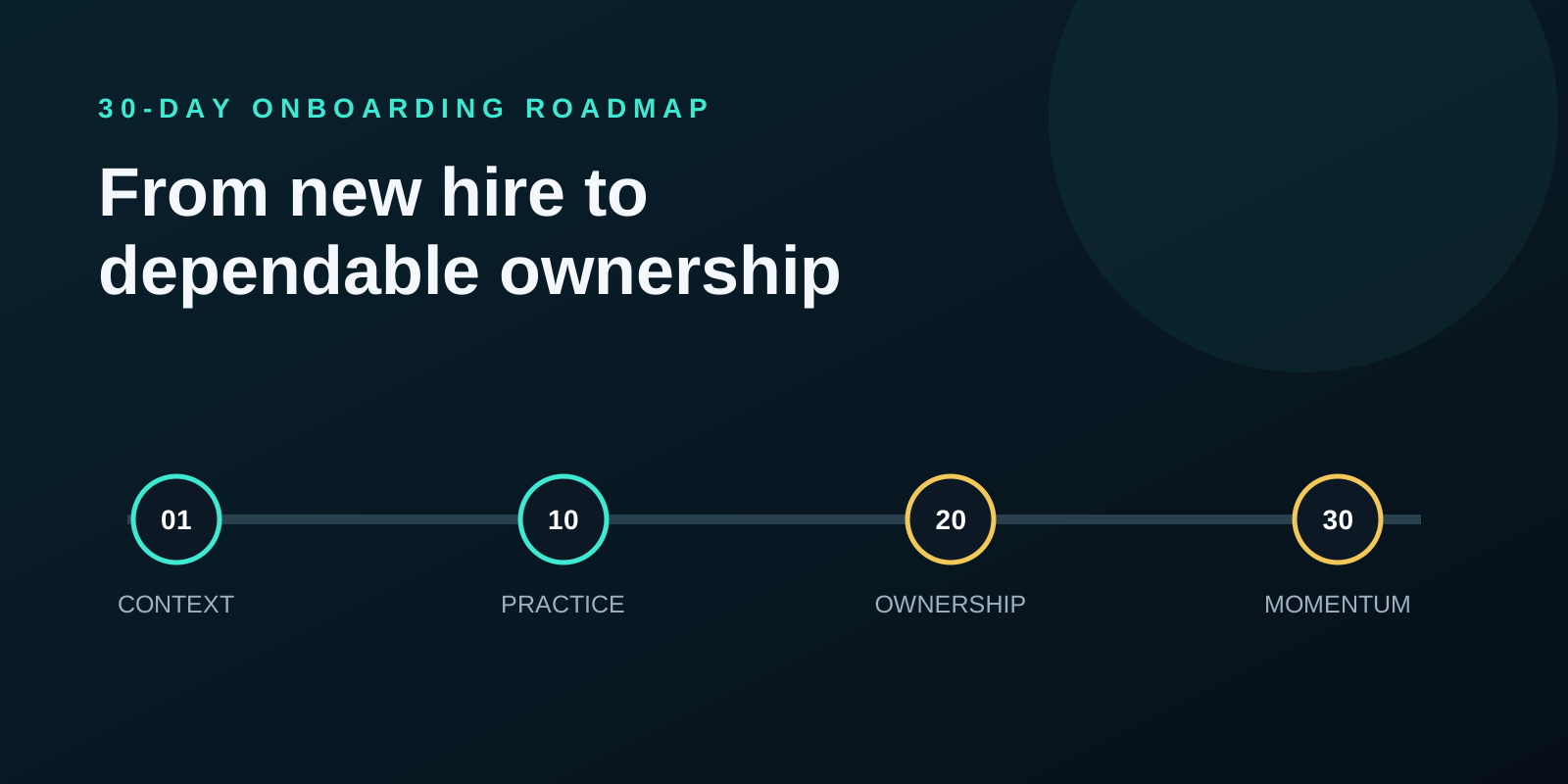
Start with one outcome, not a long task list
The fastest way to confuse a new hire is to give them twenty unrelated responsibilities on day one. Begin with the business outcome the role exists to protect. An executive assistant might protect the founder's time. A customer support specialist might protect response quality. A lead follow-up assistant might protect speed-to-lead.
When the outcome is clear, individual tasks make sense. Without it, the virtual assistant can complete checklists while still missing what matters.
Before day one: prepare the minimum viable operating system
You do not need a perfect library of SOPs. You do need a clean starting point. Prepare a short role brief, the tools they will use, the first workflow they will own, examples of good work, and the person responsible for answering questions.
- A one-page role scorecard with three to five outcomes
- Secure tool access with the minimum permissions needed
- Two or three examples of completed work that meet your standard
- A simple escalation rule for urgent, sensitive, or unclear situations
- A daily reporting format that takes less than five minutes
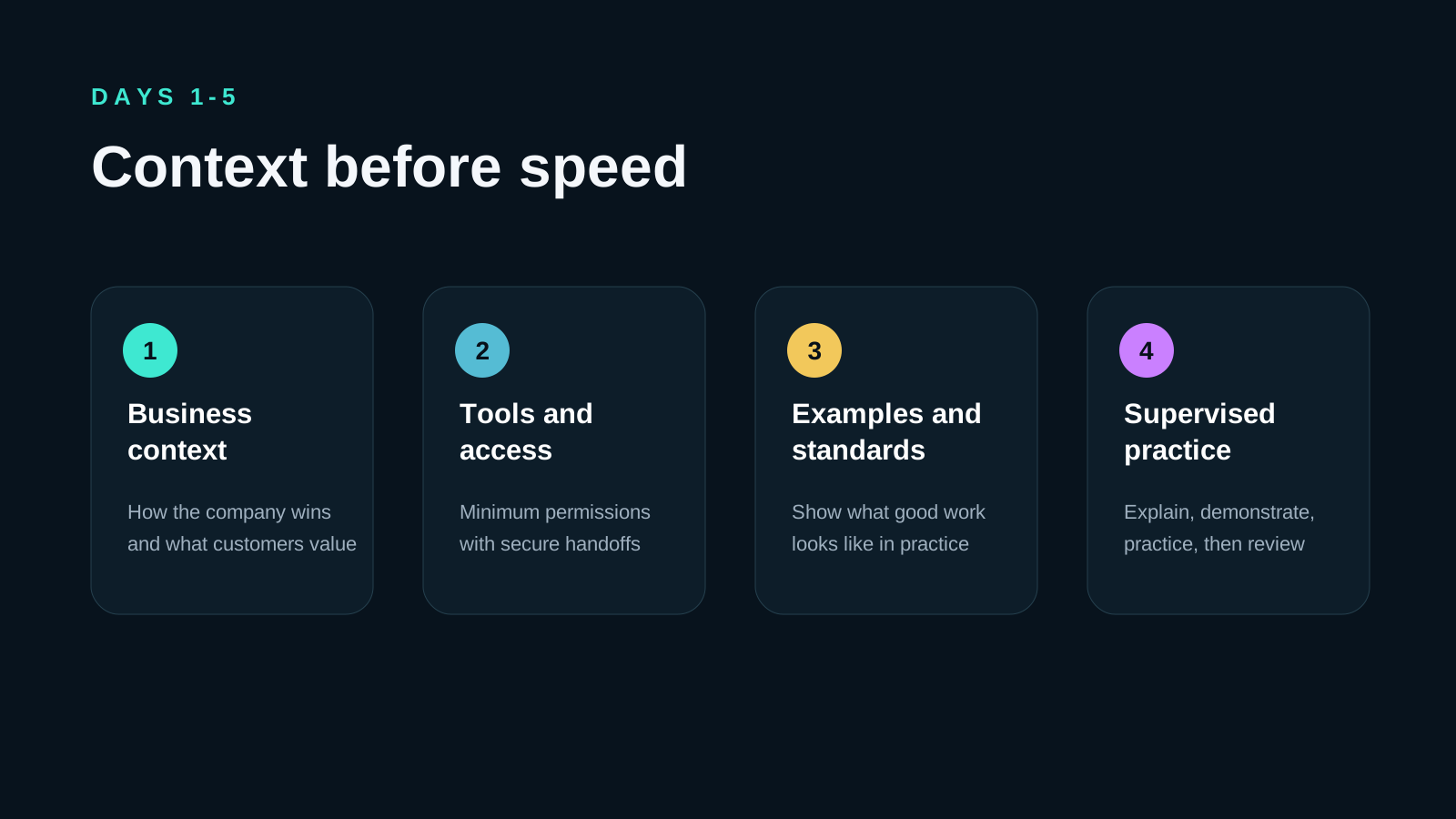
Days 1-5: teach context before expecting speed
The first week is for understanding the company, customers, language, priorities, and decision boundaries. Explain how the business makes money, what customers expect, where mistakes are expensive, and which details matter most to leadership.
Use short recorded walkthroughs and live practice instead of long manuals alone. Ask the new hire to explain the process back in their own words. That reveals gaps much faster than asking, “Do you understand?â€Â
Days 6-15: move from shadowing to controlled ownership
During the second phase, the assistant should begin owning a narrow workflow from start to finish. Let them handle real work, but review it on a predictable schedule. Avoid checking every few minutes. A daily review block creates learning without turning the founder into a full-time supervisor.
Choose a workflow with visible inputs and outputs: inbox triage, calendar coordination, lead follow-up, ticket handling, CRM updates, order support, or project status reporting. Define what “done†means and what should be escalated.
Days 16-30: expand ownership based on evidence
By the third and fourth weeks, expand responsibility only where the assistant has shown accuracy, judgment, and communication discipline. The objective is not to fill every hour. It is to build dependable ownership.
Ask the assistant to identify recurring friction, propose one process improvement, and document the workflow they now own. This shifts the relationship from task execution toward proactive support.
Use a simple scorecard instead of vague feedback
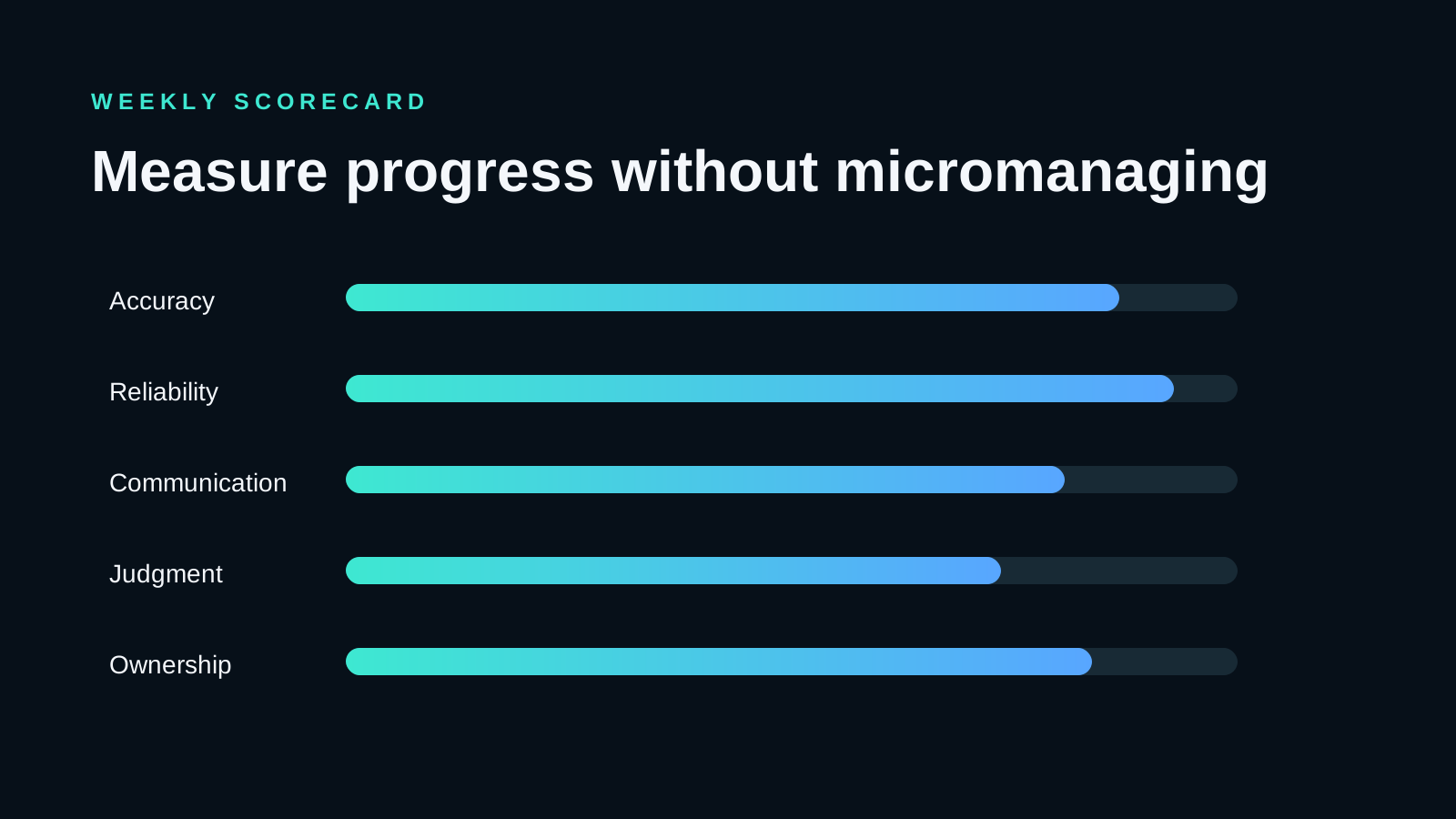
“Doing well†is not useful feedback. A short scorecard gives both sides clarity. Review it weekly during the first month and discuss specific examples.
- Accuracy: Is the work correct and complete?
- Reliability: Are deadlines and commitments protected?
- Communication: Are updates concise, timely, and clear?
- Judgment: Does the assistant know when to act and when to ask?
- Ownership: Is the workflow becoming less dependent on the founder?
Set a communication rhythm that respects the time-zone difference
Many Filipino professionals work US hours, but the operating rhythm still needs to be explicit. Define overlap hours, expected response times, the main communication channel, and what belongs in a daily update. Clear rules reduce anxiety and prevent both silence and unnecessary messaging.
A useful daily update has four parts: completed, in progress, blocked, and next. It should help the manager understand the state of the work without scheduling another meeting.
Avoid the three onboarding mistakes that create dependency
1. Giving instructions without explaining priorities
When everything sounds urgent, the new hire cannot make good decisions. Explain which outcomes outrank others.
2. Correcting work without explaining the standard
Fixing the output yourself may feel faster, but it prevents the assistant from learning why the result missed the mark.
3. Adding responsibilities before the first workflow is stable
More tasks can hide weak foundations. Stabilize one lane, then expand deliberately.
What success should look like by day 30
A successful first month does not mean the assistant knows everything. It means the business can see a clear reduction in pressure. One workflow is owned. Updates are reliable. Mistakes are declining. Questions are becoming sharper. The founder is spending less time reminding, checking, and reconnecting dropped details.
That is the foundation for a long-term working relationship and the point where Filipino talent begins creating operating leverage instead of simply adding capacity.
Want a role and onboarding plan built around your workflow?
Tell Agentic Filipino what is slowing the business down. We will recommend the right support lane and outline what the first 30 days should look like. Start with a free talent plan.